
Oopbuy Spreadsheet catalogue, sorted by how pieces pack
Sixteen categories of finds, each linked to live listings, with a note on how each kind of item behaves once it has to share a carton.
What is the Oopbuy Spreadsheet
A spreadsheet, in this corner of online shopping, is a product-listing site. It shows finds as cards grouped by category, each card pointing at a listing on a Chinese marketplace that you can buy through a shopping agent. The Oopbuy Spreadsheet is that catalogue read with Oopbuy as the agent: picks you can browse by category, then paste into Oopbuy to order.
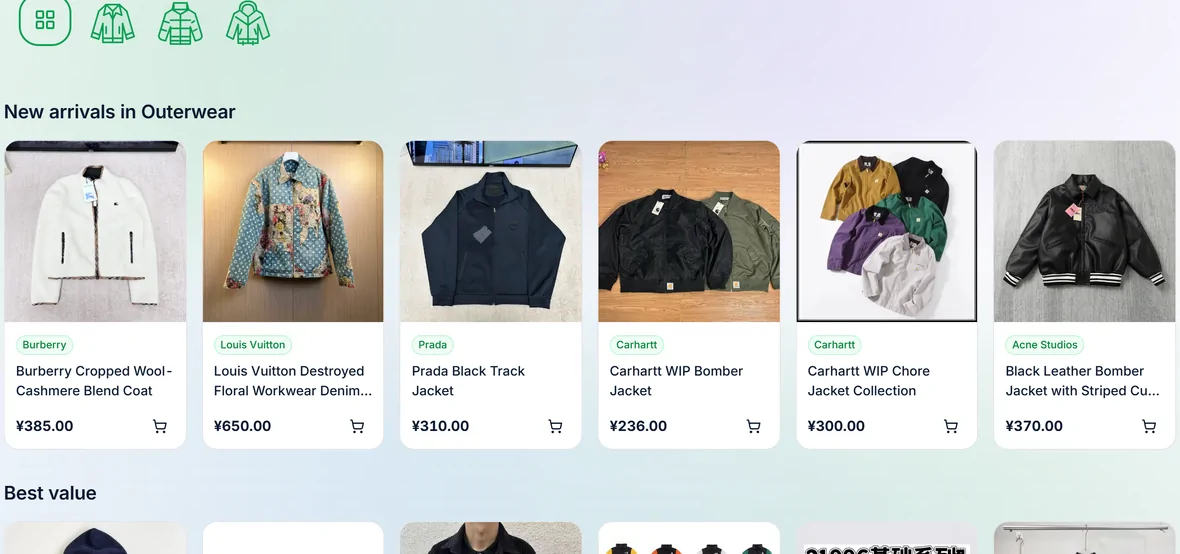
What makes this version different is the second label on every category: the packing behaviour. A hoodie squashes. A pair of sneakers in its box does not. A smart watch brings a battery, and with it a shorter route list. Knowing that at the browsing stage saves you the surprise at parcel submission.
Browse by category
Category links open the live catalogue pages. Womenswear has no single category page, so that card runs a search instead.
 Hoodies, packed softsquashes
 Tees that fold flatsquashes
 Sweatpants and joggerssquashes
 Denim and jeansdense
 Womenswear searchsquashes
 Jerseyssquashes
 Puffers and coatsbulky
 Caps and hatsholds shape
 Belts, coileddense
 Bags that hold their shapebulky
 Sneakers, boxed or notbulky
 Glasses in hard casesfragile
 Jewellerysmall
 Watchesbattery?
 Fragrancerestricted
 Gadgets with batteriesrestricted
Soft pieces: the ones vacuum bags shrink
Hoodies, tees, sweatpants, jerseys and most womenswear are the easy part of any box. They fold, they compress, and they rarely carry a route restriction. On the US list, plain clothing is accepted by every one of the 23 routes we read.
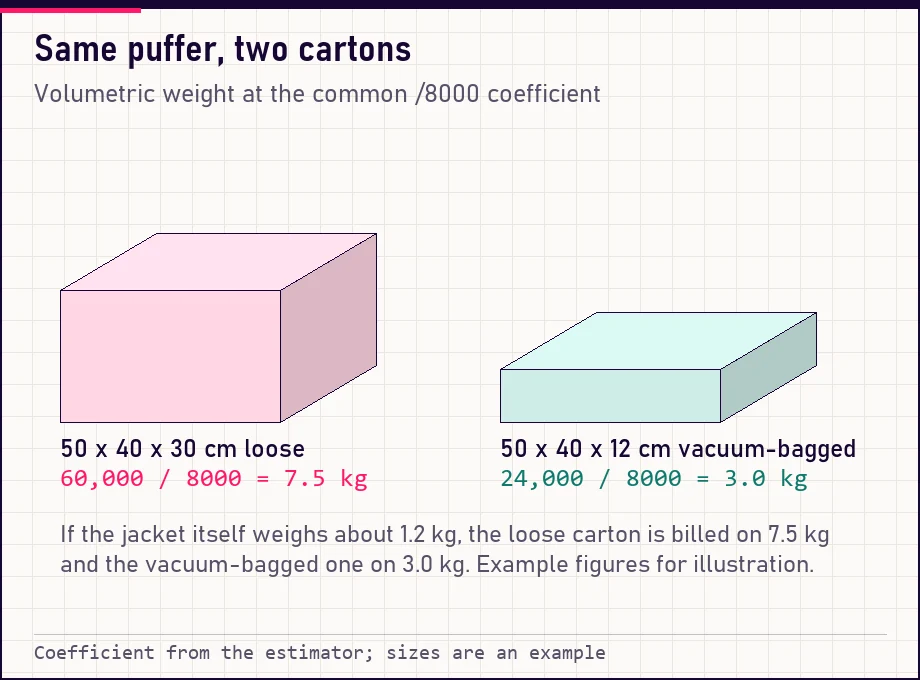
Their cost is volume, not weight. A loose puffer jacket can fill a 50 x 40 x 30 cm carton, which is 7.5 kg of volumetric weight at the /8000 coefficient most small-packet routes use. The official packing advice for a clothes-only parcel is simple packaging plus vacuum bags, with one caveat: only certain routes support simple packaging, so check your route first.
Browse hoodies, puffers and coats or sweatpants.
Rigid pieces: shoe boxes, bags and hard cases
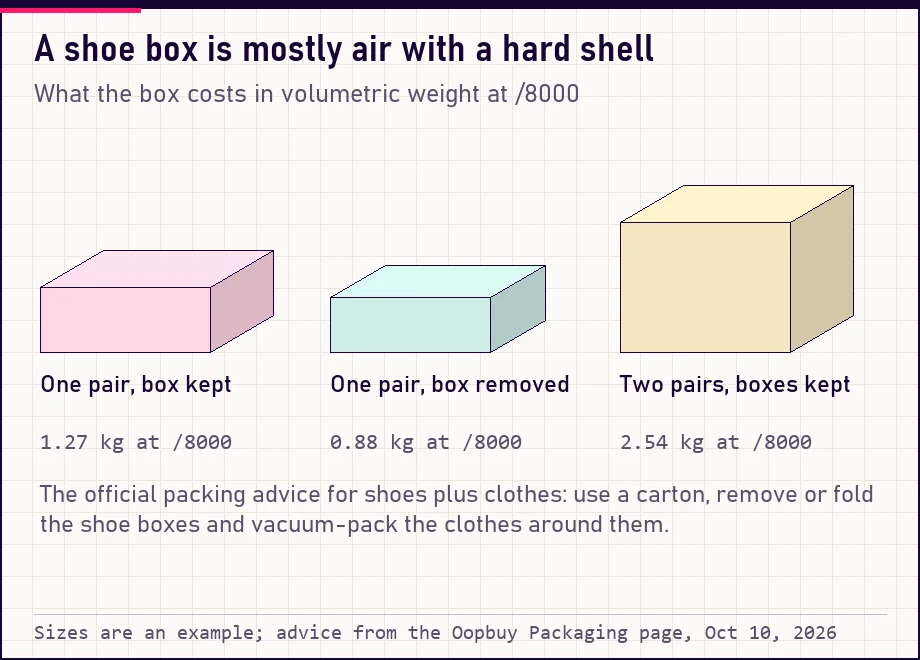
Sneakers, structured bags, glasses in hard cases and boxed accessories keep their shape. Their packaging is often the biggest thing in the parcel. A shoe box of 34 x 23 x 13 cm is 1.27 kg volumetric at /8000, which may already exceed the shoes inside it.
The official advice for shoes plus clothes is a carton, with the shoe boxes removed or folded and the clothes vacuum-packed around the pairs. Removing a box is your decision; make it knowing that a missing box can matter if you later want to return the item, since the return service excludes items whose packaging or tags were removed on request.
Pieces that bring a route restriction with them
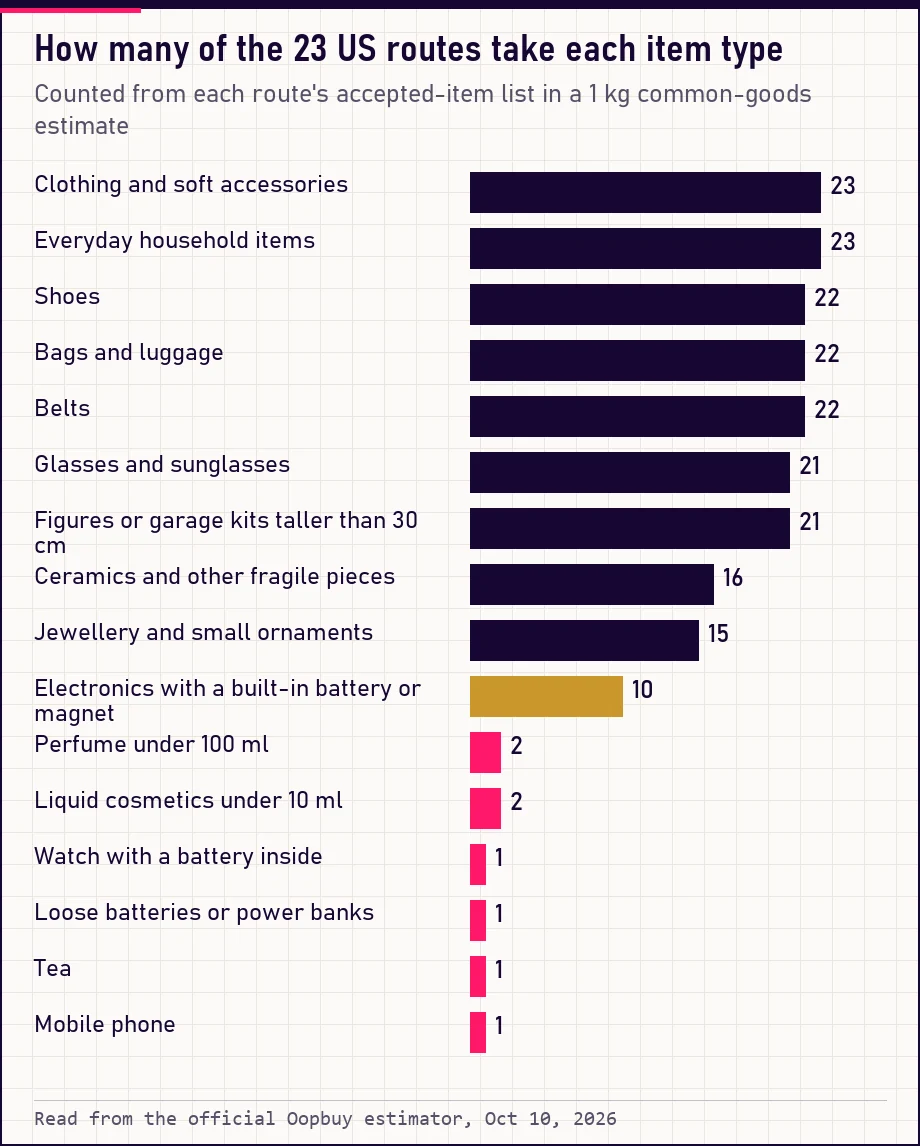
Some categories change the box no matter how small they are. Watches with batteries, earbuds, speakers, power banks, perfume and small cosmetics each have their own entry in the estimator's accepted-item list, and only a few routes include them.
Counted across the 23 US routes on October 10, 2026: built-in battery electronics 10 routes, perfume under 100 ml 2, small liquids 2, a watch with a battery 1, loose batteries 1, tea 1, mobile phones 1. These counts come from a 1 kg common-goods estimate, so routes that refuse common goods entirely would not appear in that list; treat the numbers as the routes you can mix with ordinary items, which is the case that matters for a shared box.
Browse watches, fragrance or gadgets, and see the restricted items page before you mix them with a haul.
How to choose products with the parcel in mind
Picking an item is usually about the photos, the size chart and the seller. For a parcel, four more details on the listing tell you whether this piece will cooperate with the rest of your box.
- Package size. Some listings print the size of the shipping box. That is the number the warehouse will measure, not the garment length.
- Battery or magnet. Lights, speakers, smart watches and earbuds move the item into the smaller battery route list.
- Liquids and bottles. Perfume and cosmetics are separate categories with very few routes; some routes ban liquids, powders and pastes outright.
- Rigid packaging. Gift boxes, hard cases and shoe boxes add volume. Decide early whether they travel.
More on judging items and sellers on the choosing page.
Make a shortlist you can actually order
Save the original seller link, item name, chosen variant, price in CNY, domestic delivery and the size chart. Add an unresolved-question column: a missing measurement, unclear battery, minimum quantity or return condition. A picture in a category is only an entry point to that work.
Compare the actual seller offer before replacing an unavailable link with a similar image. Check recent buyer evidence, what variant those reviews concern, and whether the seller answers a precise question. Marketplace ratings are a signal, not a guarantee that your selected item will be identical.
The next step is to capture the chosen offer in your Oopbuy account. Keep an image of the confirmed options, then use the buying guide to understand what happens after the first payment. Review item and parcel restrictions before funding goods you cannot send.